The Hardest Games Ever Made, Ranked by Player Votes
Last updated: August 2026
Based on difficulty ratings submitted by real players on How Difficult Is It?. Wizardry: The Return of Werdna - The Fourth Scenario, Super Street Fighter II Turbo, and Battletoads lead the current rankings. Updated monthly. Every score is genuine, every vote counts.
This list covers commercially released games only. Fan games, romhacks, and mods are left out on purpose: they are built by their communities specifically to be punishing, so letting them compete here would hand them most of the top 25 and tell you very little about the hardest games ever actually released. They are ranked separately in the hardest fan games of all time, where the kaizo Mario hacks and I Wanna needle games can fight it out among themselves.
Full Rankings: Top 25 Hardest Games
- 1

Wizardry: The Return of Werdna - The Fourth Scenario
The Wizardry scenario built specifically to destroy Wizardry veterans. It hands you a party at maximum level and then kills it anyway, with an endgame dungeon designed around the assumption that the player has already mastered everything the series taught. Widely held to be the cruellest entry in one of the cruellest series ever made.
- 2
Super Street Fighter II Turbo
The highest-rated game on this entire site. The arcade version's AI operates at reaction speeds that are mechanically impossible for human players to counter consistently: it reads inputs and executes reversal-perfect counters in frames no human can match. On the hardest settings it stops being a skill test and becomes a document of what machine-perfect play looks like.
- 3
Battletoads
The Turbo Tunnel is introduced as level 3 and operates at the difficulty level of a final stage — and it's not even close to the hardest part. Each subsequent level introduces a new mechanic (an ice cave climb, a rotating column sequence, an underwater gauntlet) that serves as its own fresh brutality test. The game never plateaus.
- 4
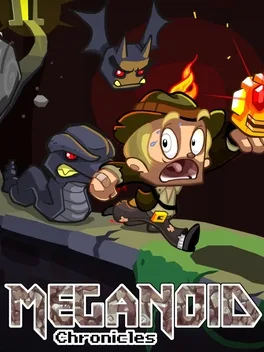
Meganoid: Chronicles
One hundred retro platforming levels stuffed with traps, spikes, and fire, and then the same hundred levels again in reverse. The individual screens are short and the attrition is the point.
- 5
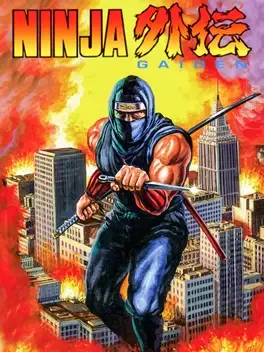
Ninja Gaiden
The NES original is a wall of punishing precision. Enemy placement is relentless — birds respawn mid-jump, projectiles come from off-screen, and hit detection favours enemies in every ambiguous case. The final boss sequence forces players through three consecutive boss fights with no recovery; die at any point and the sequence restarts from the beginning.
- 6
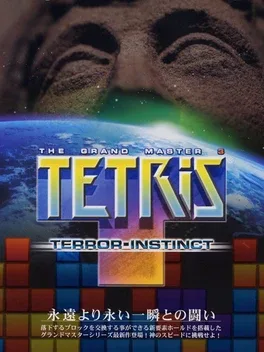
Tetris: The Grand Master 3 - Terror‑Instinct
The Grand Master line at its most notorious. Reaching the highest grades means playing at speeds where pieces lock the instant they touch down, and the final mode strips the board of visible blocks entirely, so you clear lines from memory.
- 7
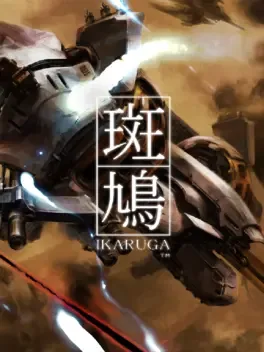
Ikaruga
Treasure's polarity puzzle-shooter looks approachable and plays like a final exam. Every bullet and enemy is black or white, you switch your ship's polarity to absorb matching fire, and chaining demands you destroy enemies in colour-coded groups of three. Short in length, merciless in execution, and with the most votes of any game here, it sits at the very top.
- 8

God Hand
The game tracks how well you're playing in real time and escalates enemy aggression to match. Die repeatedly and it eases up; play confidently and enemies begin stun-locking you and countering your patterns. The Gorilla bosses — recurring encounters — grow harder with each meeting, specifically punishing players who found a working strategy and tried to reuse it.
- 9

Wings of Vi
A precision platformer that opens hard and never eases off, pairing tight movement demands with a boss roster tuned to humiliate. It was built for players who finished the genre's usual benchmarks and wanted something meaner.
- 10
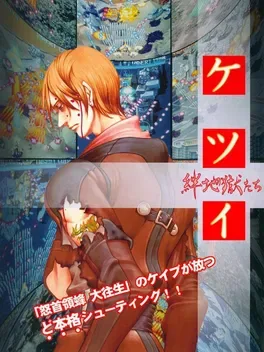
Ketsui: Kizuna Jigoku Tachi
Cave's 2003 masterpiece asks you to fight point-blank: the closer your shots land, the more you score, so survival and greed pull in opposite directions for the entire game. The patterns are fast and unforgiving, and the second loop hides one of the most feared true final bosses in the genre. It sits at the top of these rankings for good reason.
- 11

DoDonPachi DaiOuJou
Cave's 2002 bullet hell built its reputation on sheer density and the Hyper system, which floods the screen with even more fire in exchange for firepower. Clearing it is hard; reaching and beating the hidden true final boss is the stuff of shmup legend.
- 12
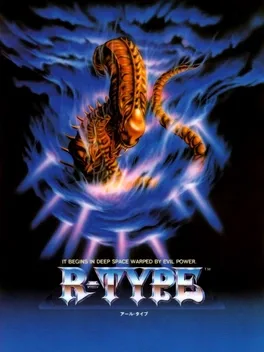
R-Type
The 1987 Irem game that defined the horizontal shooter and its cruelty. Death sends you back to a checkpoint stripped of the powerups you spent the level earning, turning recovery into its own brutal skill. Progress is memorisation, patience, and clever use of the detachable Force pod.
- 13
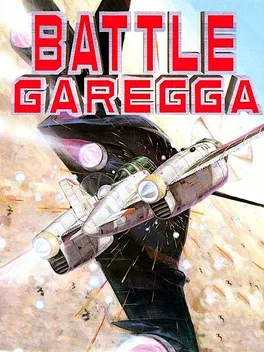
Battle Garegga
Raizing's 1996 classic runs on a dynamic rank system: the more you power up and score, the faster and denser the enemy fire becomes, so the game literally punishes you for playing well. Managing your own strength through deliberate suiciding is a mechanic unto itself. Few shooters demand this much systemic understanding.
- 14
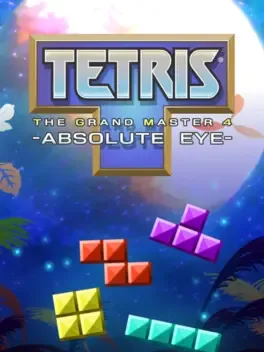
Tetris: The Grand Master 4 - Absolute Eye
The latest Grand Master, carrying forward the series' merciless grade requirements and 20G speeds. Newer than its predecessors and no kinder.
- 15
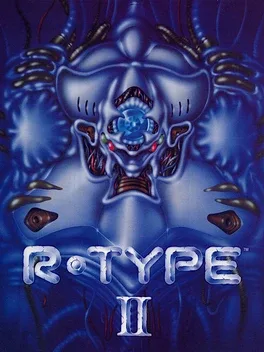
R-Type II
The 1989 sequel doubles down on everything that made the original hard: tighter corridors, nastier checkpoints, and enemy placement designed to end runs the instant you lose your Force. It is a memorisation gauntlet from the first stage to the last.
- 16
DoDonPachi Saidaioujou
Cave's bullet hell at close to its most demanding, with dense curtain patterns that leave gaps measured in single pixels. Its true final boss is one of the most feared encounters in the genre.
- 17

White Knuckle
First-person speed climbing through the guts of a collapsing structure, where precision movement and resource management are the only things between you and a very long fall. Mistakes cost the whole ascent.
- 18

Super Meat Boy
The level design is a series of compressed death traps — most stages complete in under 10 seconds, meaning deaths arrive fast and constantly. The Dark World versions of every level are substantially harder than the originals, and Dr. Fetus's final castle discards everything the earlier levels taught you.
- 19
Fear & Hunger 2: Termina
A horror RPG that treats death as the default outcome. Limbs come off permanently, ordinary encounters can end a run outright, and the systems are documented nowhere, so early playthroughs are mostly an expensive education.
- 20
Mushihime-sama Futari
Cave at its most extravagant. The higher difficulty modes throw curtains of bullets so dense they border on abstract art, and Ultra mode is frequently cited among the hardest patterns ever committed to an arcade board. Reading the gaps is a genuine test of nerve.
- 21
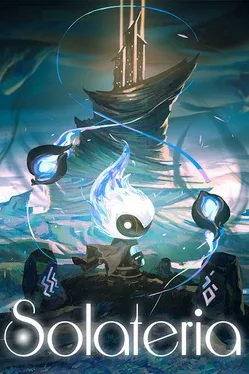
Solateria
A hand-drawn action adventure about a small fire spirit hunting the First Flame, with combat considerably less gentle than its art style advertises.
- 22

The Lion King
The licensed platformer that became a byword for unfair difficulty. Its second stage stopped a generation of children cold, and the rest of the game keeps up the standard with punishing jumps and stingy lives.
- 23

Stephen's Sausage Roll
The benchmark. A handful of sausages, a grill, and a fork you can barely steer, on grids small enough to fit on a postcard. Every solution is pure deduction with no execution component whatsoever, and the puzzles routinely take hours because the trick is never a trick, just a consequence of rules you already knew and had not finished thinking about.
- 24

Touhou Kanjuden: Legacy of Lunatic Kingdom
The Lunatic difficulty routes feature bullet patterns of a density that experienced Touhou players consider exceptional even within the series. The Pointdevice mechanic allows saving at the start of each stage but resets your score entirely — a forced trade between completion and achievement that the game frames as a design feature.
- 25

NetHack
The game that defined the genre in 1987, and still producing deaths that experienced players have never seen. NetHack's system depth is not a feature — it is the game. Every item interaction, every monster special ability, every dungeon level has a mechanics layer most players will never fully map. Nineteen raters agree on one thing: the difficulty is not in doubt.
How This List Is Built
Every game on this list was rated by real players on How Difficult Is It?. The ranking is based on each game's average difficulty score, submitted by people who have actually played it. This list is a monthly snapshot. For live rankings that update every hour, see the rankings page.
- Source: Player-submitted difficulty ratings on How Difficult Is It?
- Minimum ratings: At least 5 player ratings required to appear
- Sort method: Average difficulty score, highest first. Rating count breaks ties.
- Exclusions: Disqualified or flagged ratings are removed. Fan games, romhacks, and mods are excluded and ranked separately in the hardest fan games of all time
- Update frequency: Monthly snapshot
Frequently Asked Questions
What is the hardest game according to player ratings?
As of August 2026, Wizardry: The Return of Werdna - The Fourth Scenario is ranked #1 with a difficulty score of 9.42/10 based on 19 player ratings on How Difficult Is It?.
How is this ranking calculated?
Games are ranked by their average difficulty score submitted by players on How Difficult Is It?. Only games with at least 5 ratings are included. Disqualified or spam ratings are excluded. Games with equal average scores are sorted by number of ratings.
Are fan games and romhacks included?
No. This list covers commercially released games only. Fan games, romhacks, and mods are built by their communities specifically to be as punishing as possible, so including them would give them most of the top 25 and say very little about the hardest games ever actually released. They have their own ranking at howdifficultisit.com/articles/hardest-fan-games-of-all-time.
Is Elden Ring on this list?
Not as of August 2026. Elden Ring's average difficulty score on How Difficult Is It? does not currently meet the threshold to crack the top 25 — its open-world design lets players approach content at their own pace, which lowers the average perceived difficulty compared to older or more linear hard games.
Why do retro games rank so high?
Arcade and NES-era games were designed for maximum difficulty with no accessibility accommodations — no save states, no difficulty settings, no in-game hints. They also attract players who specifically seek out hard games, which skews ratings upward. Modern hard games like Sekiro and Cuphead rank high for the opposite reason: their reputation for difficulty draws players who already know what they're in for.
Can I add my own difficulty rating?
Yes. Create a free account on How Difficult Is It? and rate any game you have played. Your rating is included in the community average and updates the live rankings within the hour.