The Hardest Puzzle Games of All Time, Ranked by Player Votes
Last updated: September 2026

A hard action game beats you with your own hands. A hard puzzle game just sits there. Nothing is chasing you, nothing is on a timer, and the solution has been sitting in front of you the entire time. That is a far more uncomfortable kind of difficulty, and the games below have built entire reputations on it. Based on real player votes, Stephen's Sausage Roll tops this list at 8.90/10, with DROD: The Second Sky right behind at 8.77.
What follows is a top-heavy list of Sokoban variants, lockstep dungeon logic, and games whose walls are made of things you have not worked out yet. Most were built by tiny teams or single developers, several are free, and a fair few are older than the people currently recommending them. The famous names are here too, further down than their reputations would suggest, and there is a section at the end explaining why.
What Counts as a Puzzle Game?
One rule: thinking has to be the only thing under test. No reflexes, no execution, no losing a puzzle you had already solved because your hands let you down. That admits Sokoban and spatial puzzlers, deduction grids, programming and engineering games, rule-discovery games, and the cryptic adventure games descended from Myst. It excludes action games wearing a puzzle mechanic, which is why nothing from the shoot-em-up or platformer side of the catalogue turns up here no matter how clever its central gimmick is.
The interesting cases are the knowledge games. La-Mulana is shaped like a Metroidvania and Outer Wilds is shaped like a space sim, but neither is difficult because of what your thumbs are doing. Their walls are informational. You are stuck because you have not worked something out yet, and you stay stuck until you do, which is the definition this list runs on. Tunic and Fez qualify on the same grounds.
One consequence worth stating up front: the top of this list is not where the famous games are. The hardest puzzle games ever made are mostly small, cheap, and built by people with no interest in being gentle.
Full Rankings: Top 25 Hardest Puzzle Games
- 1
Stephen's Sausage Roll
The benchmark. A handful of sausages, a grill, and a fork you can barely steer, on grids small enough to fit on a postcard. Every solution is pure deduction with no execution component whatsoever, and the puzzles routinely take hours because the trick is never a trick, just a consequence of rules you already knew and had not finished thinking about.
- 2
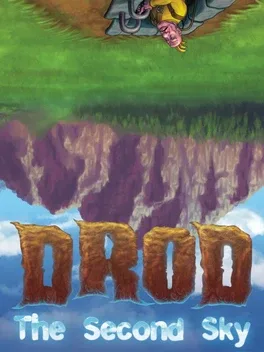
DROD: The Second Sky
The final chapter of the main DROD arc and the hardest of the five. Every monster moves in perfect lockstep with you, so combat is not combat at all, it is a deterministic puzzle where one wasted turn loses the room. The scale here is enormous and the late puzzles are merciless.
- 3
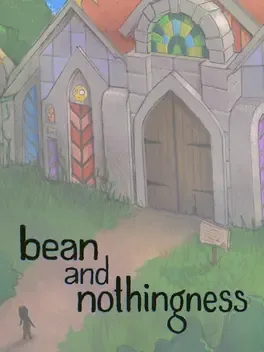
Bean and Nothingness
A sprawling logic puzzler that keeps teaching new mechanics long after most games would have run out, then folds them together until the habits the early puzzles built are actively working against you. It is enormous, uncompromising, and makes almost no concession to players who want to be let off.
- 4
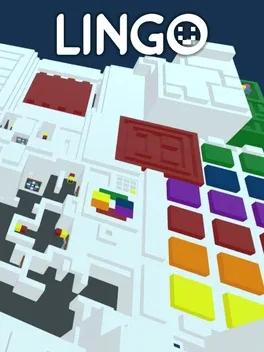
Lingo
A first-person world made entirely of wordplay, where the walls are panels and the panels are riddles about the letters in front of you. It keeps introducing new mechanics at a pace most games would consider reckless, and its endgame has a reputation for consuming hundreds of hours before anyone sees the bottom of it.
- 5

La-Mulana
A Metroidvania in shape, a puzzle game in practice. Progress hinges on cryptic tablet inscriptions scattered across the ruins, and the solutions live in a notebook rather than in your reflexes. Cross-referencing hints from opposite ends of the map to work out what to weigh, break, or burn is the whole game, and it is famously merciless about it.
- 6
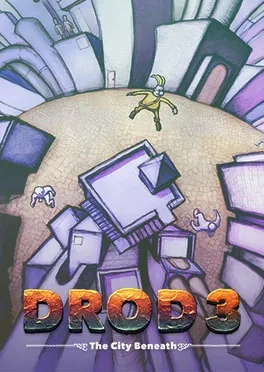
DROD: The City Beneath
The third mainline chapter, and the point where the series stops easing you in. New monster types keep arriving, each with movement rules that have to be held in your head simultaneously, and the rooms are built to punish the assumption that you have understood them.
- 7

Baba is You
The rules of each level sit on the board as pushable word blocks, so shoving BABA IS YOU aside and building ROCK IS WIN rewrites what winning means. The early puzzles teach the grammar and the late ones weaponise it, demanding solutions that feel like exploiting a bug until you realise the game intended every one of them.
- 8
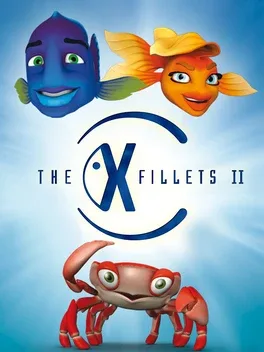
The Fish Fillets 2
A Czech underwater Sokoban about two fish of different sizes shifting debris without crushing either of them. Physics-flavoured object stacking makes each screen a single tightly interlocked chain of moves, and it earned its reputation as one of the most punishing puzzle games of its era honestly.
- 9
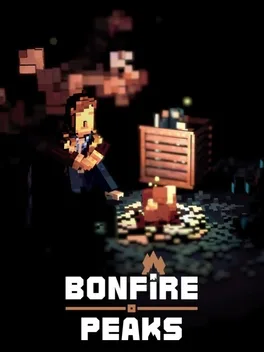
Bonfire Peaks
Sokoban in three dimensions where boxes are both your staircase and your fuel, and the goal is to burn the one thing you have been standing on. The stacking constraints make even a small island a serious problem.
- 10
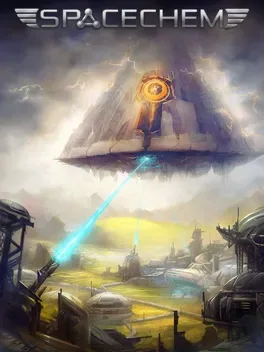
SpaceChem
Draw looping instruction paths for two atomic manipulators, bond and split molecules, and try not to let the waldos collide. The stated puzzle is chemistry, the actual puzzle is concurrent programming, and the later reactors demand pipelining that would not look out of place in a compilers course.
- 11
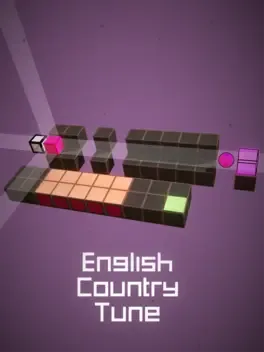
English Country Tune
An abstract 3D grid puzzler built around a rolling square and a set of mechanics presented with no explanation at all. Working out what the game even wants is the first puzzle, and the surfaces it folds space across make spatial reasoning genuinely difficult to hold in your head.
- 12
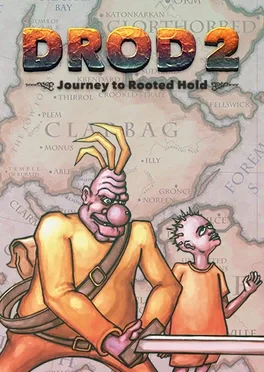
DROD: Journey to Rooted Hold
The sequel that established what DROD could be, adding a stack of new elements to the lockstep turn system and building rooms that use every one of them. Still one of the most demanding pure logic dungeons ever designed.
- 13
Jelly no Puzzle
A free browser-era puzzle game on grids barely larger than a chessboard. Blocks merge on contact, gravity is constant, and undo is your only friend. The mechanics fit in a sentence and the later levels still stop cold players who have finished everything else on this list.
- 14

La-Mulana 2
More ruins, more tablets, more obscure cause and effect. The sequel keeps the original habit of hiding critical logic behind hints that only make sense once you have already seen the thing they describe, and it expects the same patient, note-taking, cross-referencing approach.
- 15
Paquerette Down the Bunburrows
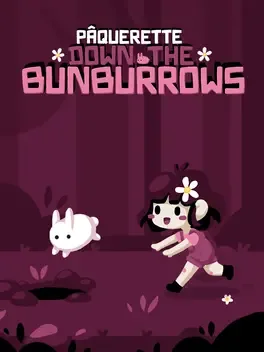
Catching rabbits in a warren, which sounds gentle and is not. Individual levels are approachable and the full completion is anything but, with layers of content that only reveal themselves once you have understood what the burrows are actually doing.
- 16
The Golem
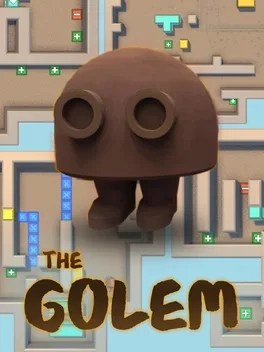
A compact Sokoban with a ruleset you could explain in a minute and a difficulty curve that never levels off. The levels are small, the pieces are few, and the solutions are buried several counterintuitive moves deeper than they look.
- 17
Robot Odyssey
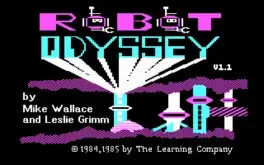
From 1984, and still routinely nominated as the hardest computer game ever made. You wire logic gates together inside robots to program their behaviour, which means debugging circuits by hand with no tools and no help of any kind.
- 18
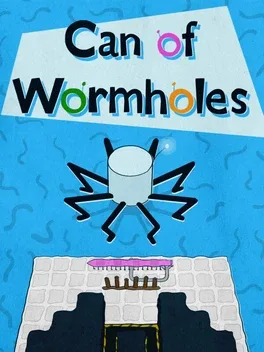
Can of Wormholes
Sokoban crossed with worms, wormholes, and a genuine willingness to break its own rules once you are comfortable. Each new mechanic arrives just as you have mastered the previous one, and the endgame puzzles combine them in ways that require rethinking what pushing even means.
- 19
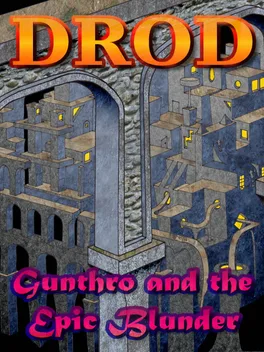
DROD 4: Gunthro and the Epic Blunder
Written as the gentle way into DROD, which puts it at the bottom of a very steep range. Gentler here means the puzzles explain themselves before they start hurting you, not that they stop hurting you.
- 20
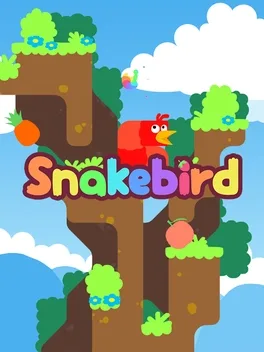
Snakebird
Deceptively adorable. The snakes lengthen as they eat, they hold each other up, and they fall the moment nothing supports them, so every level is a gravity puzzle wearing a cartoon. It is far and away the hardest game anyone has been tricked into buying by its art style.
- 21
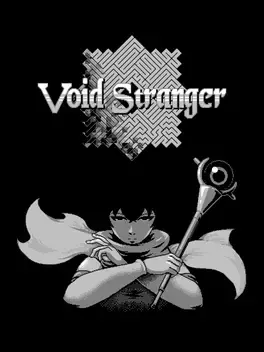
Void Stranger
A Sokoban that turns out to be hiding something much larger. The surface puzzles are strong on their own, and the layers underneath them go somewhere so far past a normal endgame that finishing the visible game is barely the halfway point.
- 22
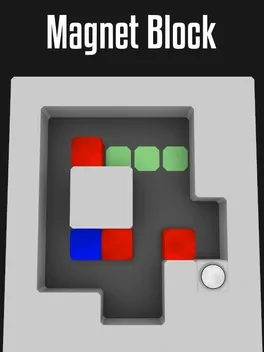
Magnet Block
Magnets attract and repel across a grid, so every move you make ripples through the whole board. Planning more than three steps ahead means simulating a chain reaction, which is exactly as hard as it sounds.
- 23
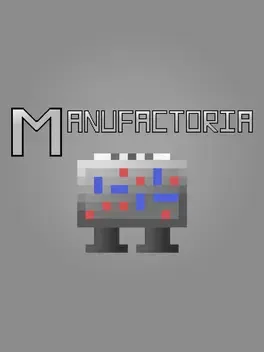
Manufactoria
Build conveyor belts that accept or reject strings of coloured dots, which is to say build finite automata with a cheerful robot skin. The late puzzles ask for machines that recognise genuinely non-trivial languages, and the game never once admits it is teaching computer science theory.
- 24
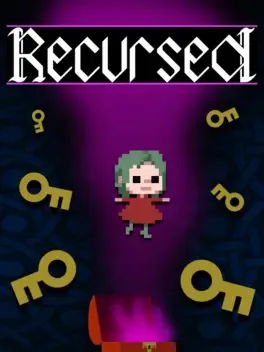
Recursed
Chests contain rooms, rooms contain chests, and objects carried between the two persist in ways that break every intuition about how nesting should work. It is the rare puzzle game where the central mechanic is recursion itself, and the moment it clicks is worth the fifty failed attempts before it.
- 25
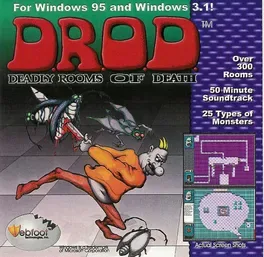
Deadly Rooms of Death
The 1996 original that invented the whole idea: a dungeon crawler where every enemy is a clockwork component and the only weapon is thinking two dozen turns ahead. It has aged, and its best rooms are still brutal.
Honorable Mentions
Just missed the top 25
Genuinely punishing puzzle games that landed just below the cut.
- TIS-100 (8.06/10, 18 ratings). Assembly programming on a deliberately broken parallel computer where each node holds a dozen instructions and one register. Splitting a problem across a grid of tiny processors that can barely talk to each other is the whole design, and it is the purest programming puzzle on this list.
- Tametsi (8.00/10, 13 ratings). Minesweeper stripped of luck. Every one of its hand-designed boards is solvable by deduction alone, with irregular shapes and extra constraints layered on, so a wrong click is a reasoning error rather than a bad guess. The late puzzles chain inferences a dozen deep.
- Rhem 2: The Cave (8.00/10, 9 ratings). A Myst-like whose machinery interlocks across the entire map, so a switch in one cave changes something you saw an hour earlier and three screens away. It assumes you are keeping notes and drawing your own map, because it offers no help with either.
- The Witness (7.97/10, 30 ratings). Over six hundred line puzzles that teach their own rules in silence, with no text and no tutorial, and then hide their best material in the environment itself once you learn to see it. The panels are hard; the realisation about what else counts as a panel is harder.
- 14 Minesweeper Variants (7.93/10, 15 ratings). Fourteen distinct rule variants bolted onto minesweeper, individually and then in combination. Guessing is never required and never sufficient, and the combined-variant boards near the end demand the kind of layered deduction usually reserved for competitive logic puzzle circuits.
- Magicube (7.91/10, 11 ratings). A modern thinky puzzler with a clean surface and a viciously deep set of interactions underneath. It comes up repeatedly in hardest-ever discussions from people who have already finished the usual suspects.
- Opus Magnum (7.90/10, 21 ratings). Assemble alchemical machines from rotating arms and tracks, then watch the leaderboard tell you how wasteful your working solution was. Finishing a puzzle is achievable; the difficulty lives in the optimisation histograms that make you rebuild the whole thing three times.
- A=B (7.89/10, 9 ratings). Programming with a single operation: replace this string with that string. No variables, no loops, no arithmetic, just rewrite rules. Building anything useful from that means reinventing computation from the ground up, and the later challenges are brutal.
The famous ones, and why they rank lower
Ask most people to name a hard puzzle game and they will name one of these. They are among the best the genre has produced, and difficulty is simply not what any of them were optimising for.
- Myst (6.81/10, 31 ratings). The game that defined the genre, and gentler than its reputation. The island is cryptic and the notebook is mandatory, but the puzzles are fair and the pacing is unhurried compared to the Rhem games it inspired.
- Portal 2 (6.67/10, 33 ratings). A masterclass in teaching without tutorials, which is exactly why it is not hard. Every chamber is engineered so the solution occurs to you at the right moment, and the co-op campaign is more generous still.
- Return of the Obra Dinn (6.45/10, 29 ratings). Deduction with real teeth, but a structure that gives you a great deal of help. You can guess-check identities in batches of three, and the game confirms them for you, which keeps it from ever becoming genuinely punishing.
- Portal (6.30/10, 40 ratings). Nineteen chambers of near-perfect onboarding. It is one of the best-designed games ever made and among the easiest things on this entire list, which is not a contradiction.
- Monument Valley (5.68/10, 28 ratings). Beautiful, brief, and built to be finished. The impossible geometry is there to be admired rather than fought, and almost nobody gets stuck for long.
- Tetris (5.53/10, 36 ratings). Difficulty by endurance rather than deduction. The rules are trivial and the challenge is how long your hands and attention hold out, which is a different axis entirely from everything above it.
How This List Is Built
Every game on this list was rated by real players on How Difficult Is It?. The ranking is based on each game's average difficulty score, with a minimum of 5 ratings required to qualify. This is a monthly snapshot; for live rankings that update every hour, see the rankings page.
- Source: Player-submitted difficulty ratings on How Difficult Is It?
- Genre scope: Puzzle games where the challenge is reasoning rather than execution, including Sokoban, deduction, programming, rule-discovery, and cryptic adventure games
- What the score means: Difficulty of clearing the game as each rater experienced it
- Minimum ratings: At least 5 player ratings required to appear
- Sort method: Average difficulty score, highest first. Rating count breaks ties.
- Update frequency: Monthly snapshot
Frequently Asked Questions
What is the hardest puzzle game according to player ratings?
As of September 2026, Stephen's Sausage Roll ranks #1 with a difficulty score of 8.90/10 based on player ratings on How Difficult Is It?. DROD: The Second Sky (8.77) and Bean and Nothingness (8.70) follow just behind. The top of the list is dominated by Sokoban-style spatial puzzlers, the DROD dungeons, and cryptic games where progress depends on knowledge rather than execution.
What counts as a puzzle game here?
Games where thinking is the only thing being tested. No reflexes, no execution skill, no losing a solved puzzle because your hands failed you. That covers Sokoban and spatial puzzlers, deduction grids, programming and engineering puzzle games, rule-discovery games, and the cryptic adventure games in the Myst tradition. Action games with a puzzle mechanic bolted on are excluded, which is why nothing from the shoot-em-up or platformer side of the catalogue appears.
Why is La-Mulana on a puzzle game list?
Because its difficulty is almost entirely cerebral. La-Mulana is shaped like a Metroidvania, but progress depends on decoding cryptic tablet inscriptions and cross-referencing hints from opposite ends of the map, not on platforming skill. It sits alongside Tunic, Fez, and Outer Wilds, which are all games whose real obstacle is knowledge rather than execution.
How is this ranking calculated?
Games are ranked by their average difficulty score submitted by players on How Difficult Is It?. Only games with at least 5 ratings are included. Disqualified or spam ratings are excluded. Games with equal average scores are sorted by number of ratings.
Why do Portal and Tetris rank so low?
Both are landmark puzzle games and neither is especially hard to finish. Portal is famously generous, guiding players toward each solution, and Tetris asks for reaction speed rather than deduction, so its difficulty depends entirely on how long you choose to keep playing. Difficulty and quality are separate measurements, and this list only ranks the first one.
Can I add my own difficulty rating?
Yes. Create a free account on How Difficult Is It? and rate any game you have played. Your rating is included in the community average and updates the live rankings within the hour.